
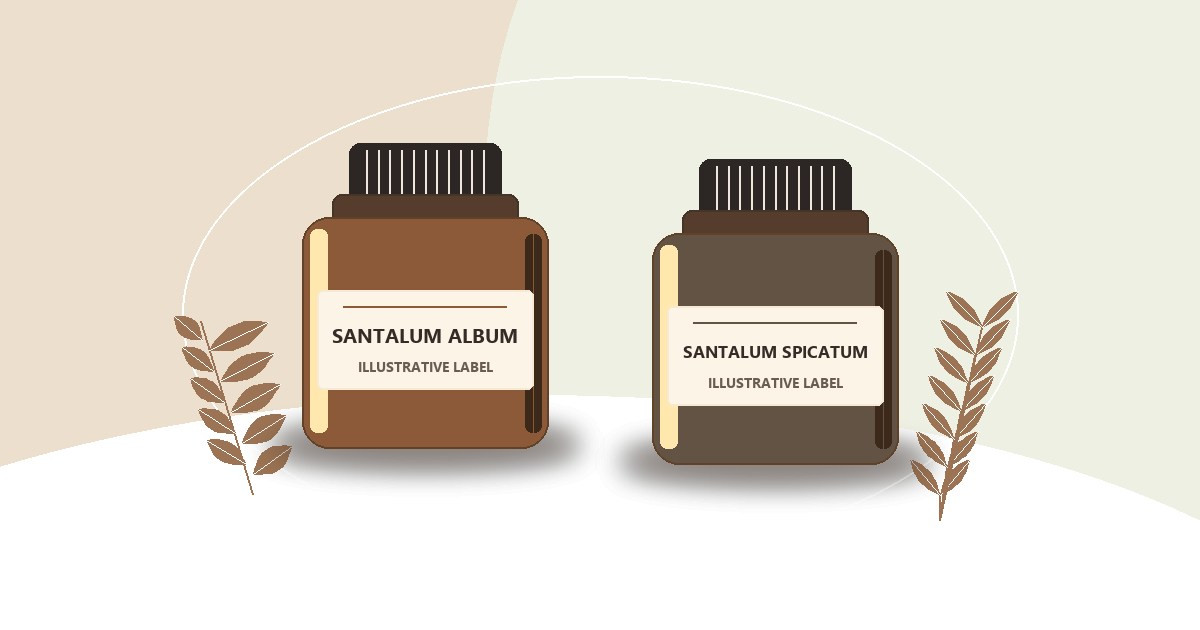
Check the species separately from the country when you shop for sandalwood oil. doTERRA's Sandalwood sheet identifies Santalum album. The Liberty Natural certificate for Australian Sandalwood lists Santalum spicatum. The second word gives you a practical way to tell which species each document describes. [1] [2]
Read the species and origin as separate fields
| Field | First documented oil | Second documented oil |
|---|---|---|
| Supplier's name | Sandalwood, doTERRA | Australian Sandalwood, Liberty Natural [1] [2] |
| Botanical name | Santalum album | Santalum spicatum [1] [2] |
| Origin information | Find out whether the country refers to the plant, extraction or packing | Check the wording in the supplier's documentation before comparing |
eoASSIST Essential Oils Guide
Search for the oil named on your label and check the matching entry.

When the listing puts a country in the title
Find Species or Botanical name first. Then read what the location describes. Growing, extraction and packing can each have a location. Ask which one the seller means if country of origin affects your purchase.
Compare product codes as well as species names. Liberty Natural gives its Santalum spicatum example the code 4993. If the retailer sells an oil under a different supplier or code, locate the corresponding specification for that bottle. [2]
Keep the full botanical name beside Sandalwood in your notes. The species lets you match reference entries when two listings use the same common name or use the geographic wording differently.
Check the botanical name on an essential oil label
eoASSIST Essential Oils Guide
Search the full Santalum name in eoASSIST when you compare another sandalwood bottle.