
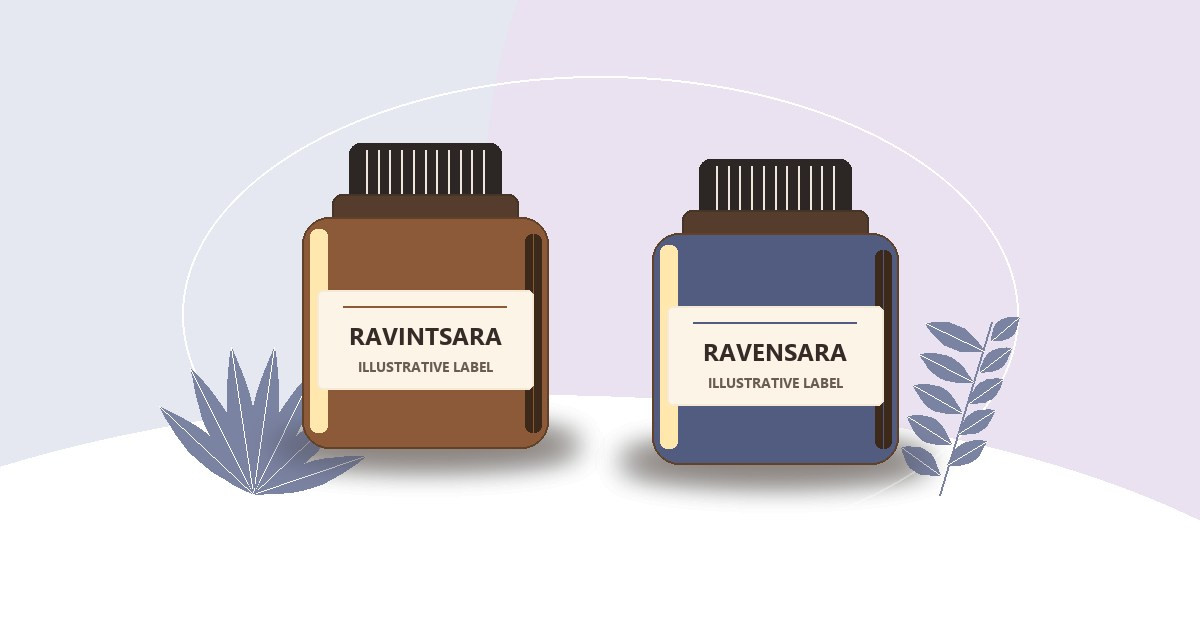
Ravintsara and ravensara look similar on a label. Start with the botanical field. doTERRA lists Cinnamomum camphora for its Ravintsara oil. Kew records Ravensara aromatica as a historical name and links it to the accepted name Cryptocarya agathophylla. [1] [2] [3] [4]
Check the botanical name behind the spelling
| Label term | Where to verify it |
|---|---|
| Ravintsara | Read the species and plant part. The doTERRA example lists Cinnamomum camphora and leaf. [1] |
| Ravensara | Check the supplier's botanical name and plant part. If the sheet uses Ravensara aromatica, check its Kew taxonomic record. [3] [4] |
| Common name only | Ask for the full botanical name, plant part and a specification for the product code. [2] |
eoASSIST Essential Oils Guide
Search for the oil named on your label and check the matching entry.

How to compare a new label with an older reference
Kew's plant-name database records the use of similar common names across sources. When you read an old reference, copy its complete botanical name, then check the accepted name and synonyms before matching it to the name on your bottle. [2] [3] [4]
Check the stated plant part next. Leaf is explicit on the Ravintsara example from doTERRA. If a second product has only the retail name, ask the supplier to add its plant part and full species to the comparison. [1]
Keep both the printed name and the scientific name in your notes. On your next purchase you can search for the product as sold and still verify the exact plant against the supplier's documentation.
Find the species using the botanical name
eoASSIST Essential Oils Guide
Look up the full botanical name in eoASSIST and compare it with the specification for your bottle.