
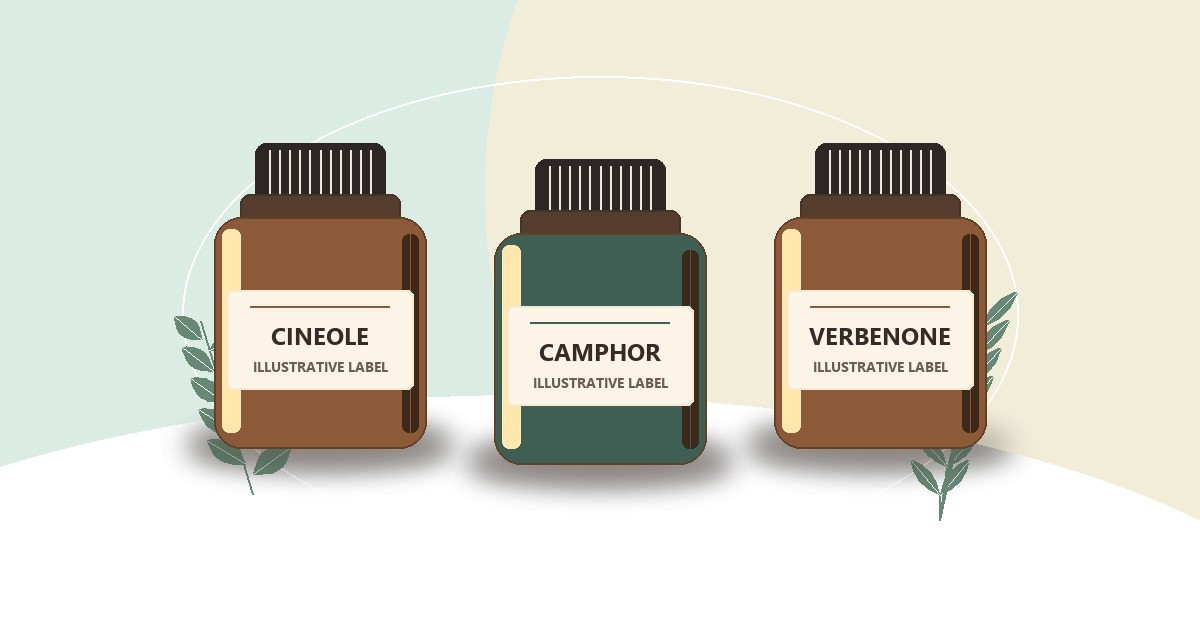
Cineole, camphor and verbenone are names to look for when a supplier qualifies its rosemary oil by chemotype. Read the CT wording alongside the botanical name and the batch number. In their analysis of rosemary samples, Satyal and colleagues found several distinct compositional profiles. [1]
Match the words on the label to the document
| Label wording | Look for in the report | Helpful check |
|---|---|---|
| Cineole | 1,8-cineole | Read the CT field and the corresponding line in the batch report. [3] |
| Camphor | Camphor | Match the report with the batch on your bottle. [4] |
| Verbenone | Verbenone | Compare the full grade name and the batch document. [5] |
eoASSIST Essential Oils Guide
Search for the oil named on your label and check the matching entry.

How to check a rosemary bottle with no CT field
Copy the name, product code and lot number from the bottle. Ask whether the supplier assigns a chemotype to that product and whether it has a corresponding batch report. The study above is evidence that profiles vary across samples. A supplier's report is where you check the particular bottle you can buy. [1]
When a report is available, find the full compound name and record the result with its unit. Keep the reported number alongside the product code. That makes it easier to compare the two suppliers without mixing figures from different lots.
For later reference, group the product name, CT wording and lot under one entry in your notes. If one of those fields is missing, add a question for the supplier. This keeps the second comparison quicker than the first.
Read the chemotype field on an essential oil label
eoASSIST Essential Oils Guide
Find rosemary in eoASSIST and use your supplier's document to compare the exact grade wording.