
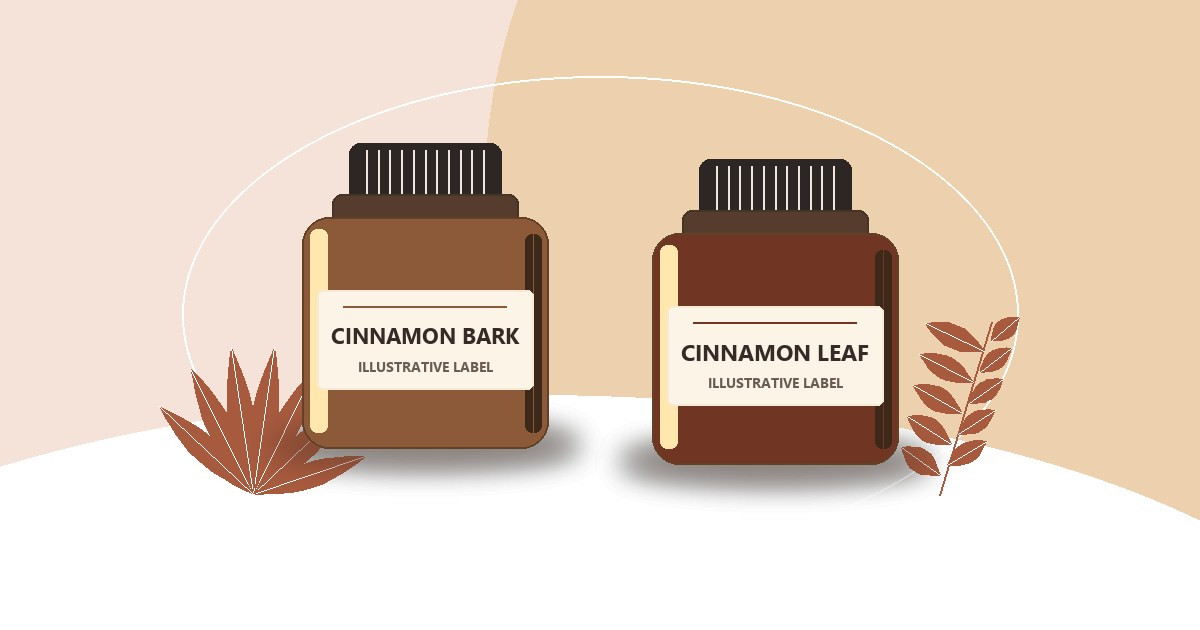
Look for Bark or Leaf when two bottles both say Cinnamon. Lebermuth's bark oil and leaf oil specifications both name Cinnamomum zeylanicum. The plant part appears in the product name and again in the INCI ingredient name, so checking just the Latin species leaves part of the job unfinished. [1] [2]
Compare the same fields on both sheets
| Field | Bark oil | Leaf oil |
|---|---|---|
| Botanical name | Cinnamomum zeylanicum | Cinnamomum zeylanicum [1] [2] |
| Word in the INCI name | Bark | Leaf [1] [2] |
| Example supplier code | 50-5075-02 | 50-6080-12 [1] [2] |
eoASSIST Essential Oils Guide
Search for the oil named on your label and check the matching entry.

What to do with a listing that only says Cinnamon
Open the ingredients and the manufacturer's technical sheet. If the shop title says Cinnamon, find the exact botanical name first and then look for Bark or Leaf. When Cassia is listed alongside the two oils, open its own documentation and record its species separately.
Match the supplier's code to the product in your cart. In these examples the bark and leaf sheets carry different codes. A retailer might use its own SKU, so ask for the matching manufacturer's sheet if the two identifiers differ. [1] [2]
For a quick comparison note, record the displayed name, the full Latin name and the plant part. If the last field is missing, you now have one specific question to ask before choosing a bottle.
How to find the plant part on an oil label
eoASSIST Essential Oils Guide
Look up the label name in eoASSIST and check which species and plant part the entry describes.