
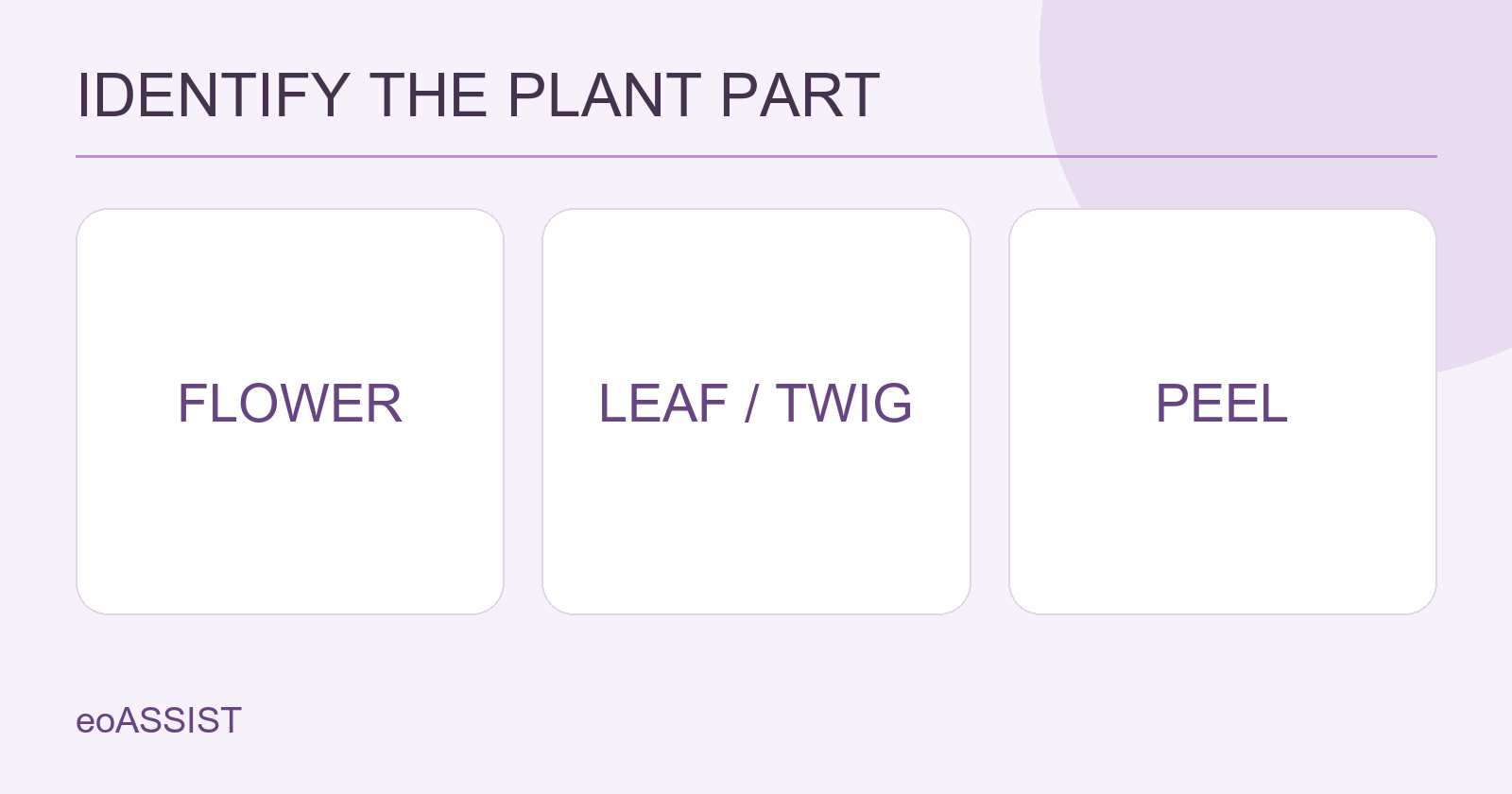
Find the plant part in the label and technical description of the oil. A plant name alone does not tell you whether flowers, leaves, wood, peel or another material was used. Match the particular product rather than a familiar scent.
Look for Plant part
Copy the whole field, including combinations. "Leaf and twig" means both leaves and twigs, not leaves alone. Keep the original wording beside your translation when comparing documents in different languages.
For example, the US doTERRA Petitgrain description, revision 012621 specifies leaves and twigs. It also associates neroli with flowers and bitter orange oil with peel. These examples show why the source material should be read for each product.
The eoASSIST oil reference
Search for oils by name and open their reference entries.

Make a product-specific record
| Field | Record |
|---|---|
| Product | Exact name and manufacturer |
| Botanical name | The full wording in the source |
| Plant part | Original term and a clear translation |
| Extraction | A separate method field, if stated |
| Document | URL, market and revision |
Keep plant part separate from extraction
"Flowers" describes the material. "Steam distillation" describes the process. Both may be needed to identify the product. The same plant in two product names does not establish identical material or composition.
If a package and document differ, check the item code, market and revision date. Ask the manufacturer which description applies to your bottle. Do not correct a label yourself from a general reference entry.
When the field is missing
Record "not stated" and request technical information from the seller. A missing field alone does not establish authenticity. The plant part also does not automatically determine permitted use.
Continue with orange, petitgrain and neroli and extraction methods. The example document applies to its stated market and revision.
The eoASSIST oil reference
Search for oils by name and open their reference entries.