
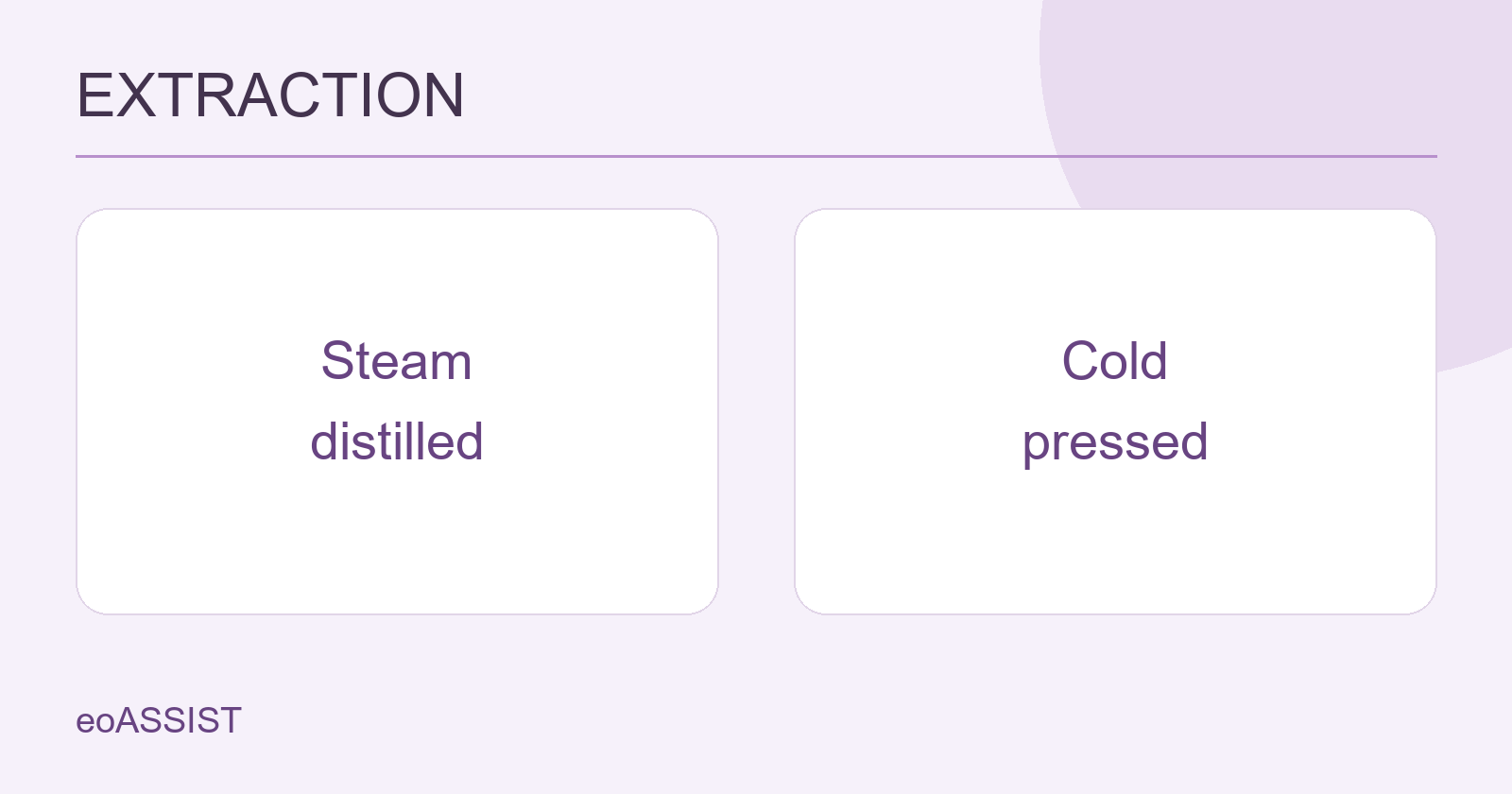
Steam-distilled and cold-pressed describe extraction methods. Steam distillation uses steam, followed by condensation and separation of the oil. Cold pressing is mechanical extraction, used especially for citrus peel. These terms help identify the material. Neither term establishes a particular batch's quality by itself.
Where to find the extraction method
Read the back label and the manufacturer's technical description. Copy the exact wording: steam distilled, expressed, cold pressed or its translated equivalent. Keep the botanical name and plant part beside it. The name "orange" alone does not identify the material and process used.
If the method appears only on a shop page, keep the address and check date. Ask the manufacturer to resolve a disagreement between the page and the package for the specific product you have.
The eoASSIST oil reference
Search for oils by name and open their reference entries.

Read the two descriptions
| Wording | What it describes | What to check separately |
|---|---|---|
| Steam distilled | Extraction using steam | Plant, raw-material part and further processing |
| Cold pressed / expressed | Mechanical extraction | Plant part and the exact product specification |
This table explains terms, rather than a home-extraction procedure. Do not treat cold pressing as the production method for every essential oil. Do not transfer a term from a fixed vegetable oil to an essential oil solely because both products are called oils.
Compare two products from the same plant
Make a short record for each: complete name, plant part, method and the finished product's full ingredients. Compare that set of details together. A method difference does not automatically tell you which bottle suits your purpose or device.
Copy any additional processing description too. Do not drop unfamiliar words from your note. A photograph and a question about that product's exact wording give the manufacturer something concrete to explain.
Use a reference alongside the package
Start with the plant name in the eoASSIST catalogue. Keep your bottle's information beside the entry. Read the essential-oil and fragrance-oil comparison for product categories, or the label guide for a packaging checklist.
Source
EDQM, Guidance on essential oils in cosmetic products, second edition, 2024, section 3.2.1. Definitions checked on 11 November 2026. We used the process distinction, without adding recipes, doses or medical-use conclusions.
The eoASSIST oil reference
Search for oils by name and open their reference entries.