
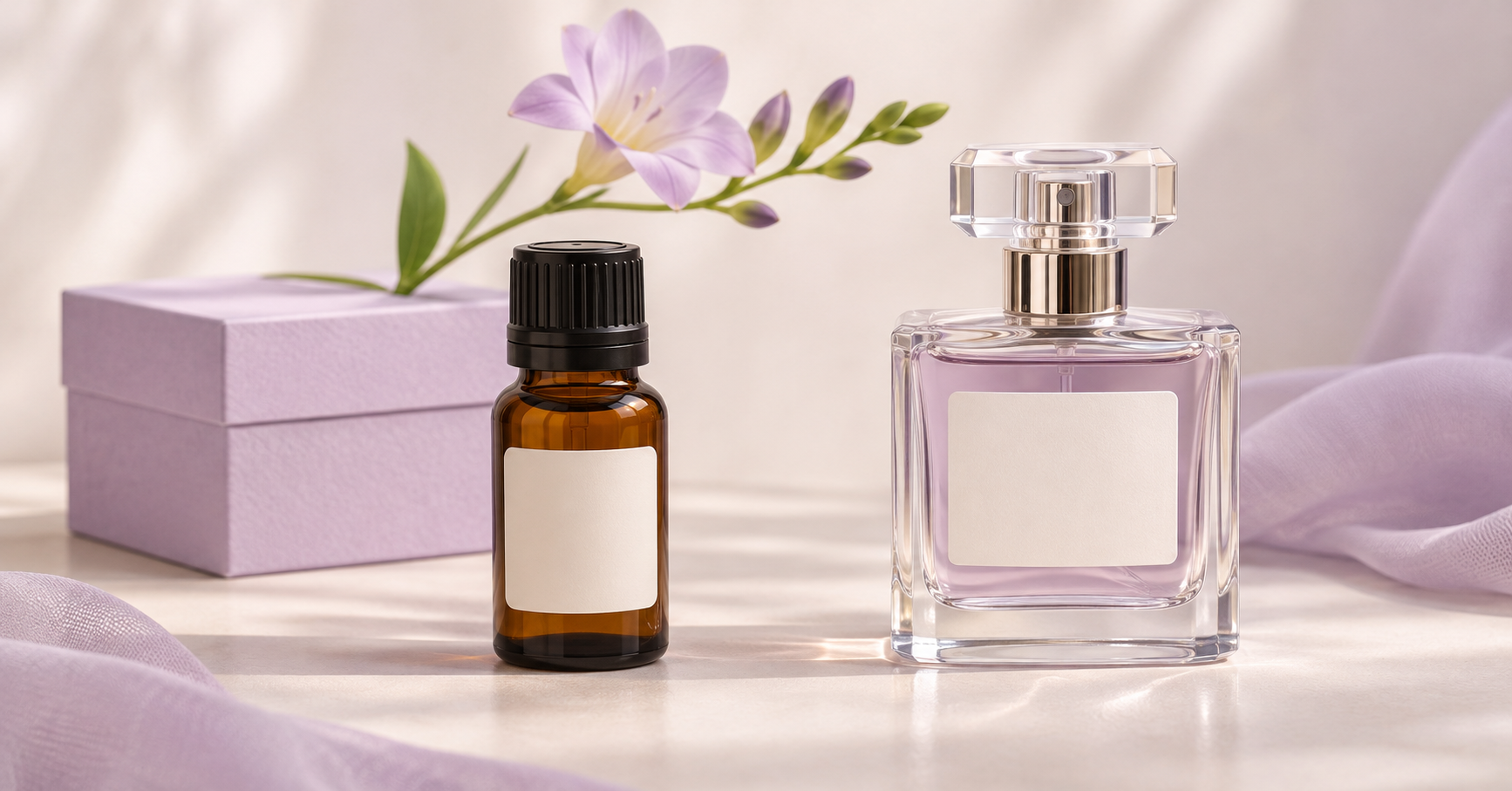
An essential oil and a fragrance composition describe different aspects of a product. For an essential oil, the plant material and extraction process matter. For a fragrance composition, check its ingredients and the finished product's intended use. A similar scent or the word "lavender" on two packages does not make their formulations identical.
What an essential oil is
An essential oil is an aromatic plant extract containing volatile components. Common production methods include distillation and mechanical expression from citrus peel. Tisserand Institute explains these processes separately from other types of aromatic plant extract.
For the product you are considering, look for the plant name, plant part and extraction method. The word "oil" alone does not answer every question about its contents. Read the entire ingredient list if several essential oils or a carrier are included.
The eoASSIST oil reference
Search for oils by name and open their reference entries.

What a fragrance composition describes
A fragrance composition is created to produce a particular smell. IFRA describes the use of both natural aromatic materials and synthetic ingredients in fragrance creation. An essential oil can be one ingredient in such a composition.
The words fragrance oil or aroma oil do not disclose a complete formula by themselves. Read the ingredient information and the manufacturer's description. Do not infer that the product must contain only synthetic materials, or that the presence of an essential oil makes it suitable for every use.
Compare similar names using the missing details
These are fictional product descriptions, rather than real items. They show what information is needed for comparison. Treat a missing detail as a question for the manufacturer.
| Description | What else to check |
|---|---|
| Lavender essential oil | Botanical name, plant part, extraction method and ingredients |
| Lavender fragrance oil | Composition description, ingredients and the finished product's intended use |
| Lavender in a carrier oil | The named carrier and the aromatic ingredients listed |
The word Lavender alone does not establish that the second item is the same product as the first. Read the third as a finished formulation with a carrier. See the label-reading guide for a worked comparison of two labels.
Check intended use separately
Find out what the manufacturer made the product for. A room-fragrance liquid, a manufacturing ingredient and a finished cosmetic can have different instructions. A scent name does not specify a method of use.
For an electric diffuser, compare the liquid's information with the manual for your exact device. Do not treat products with the same scent name as interchangeable. Use the ultrasonic and waterless diffuser comparison to start reading device specifications.
Questions to send the seller
- What is the full product name, and where can I read its ingredients?
- Is it one essential oil, a fragrance composition or a finished product with a carrier?
- What intended use and restrictions does the manufacturer state?
- Is there information about compatibility with my device?
Use the eoASSIST catalogue to explore a plant oil's name. For a fragrance composition's actual formula and intended use, check the manufacturer's information. This comparison helps distinguish product descriptions and does not establish health effects or provide usage recipes.
Sources
- Tisserand Institute on essential-oil extraction. Used for distillation and mechanical expression.
- IFRA on fragrance creation. Used for natural and synthetic fragrance materials. IFRA is an industry association.
The eoASSIST oil reference
Search for oils by name and open their reference entries.