
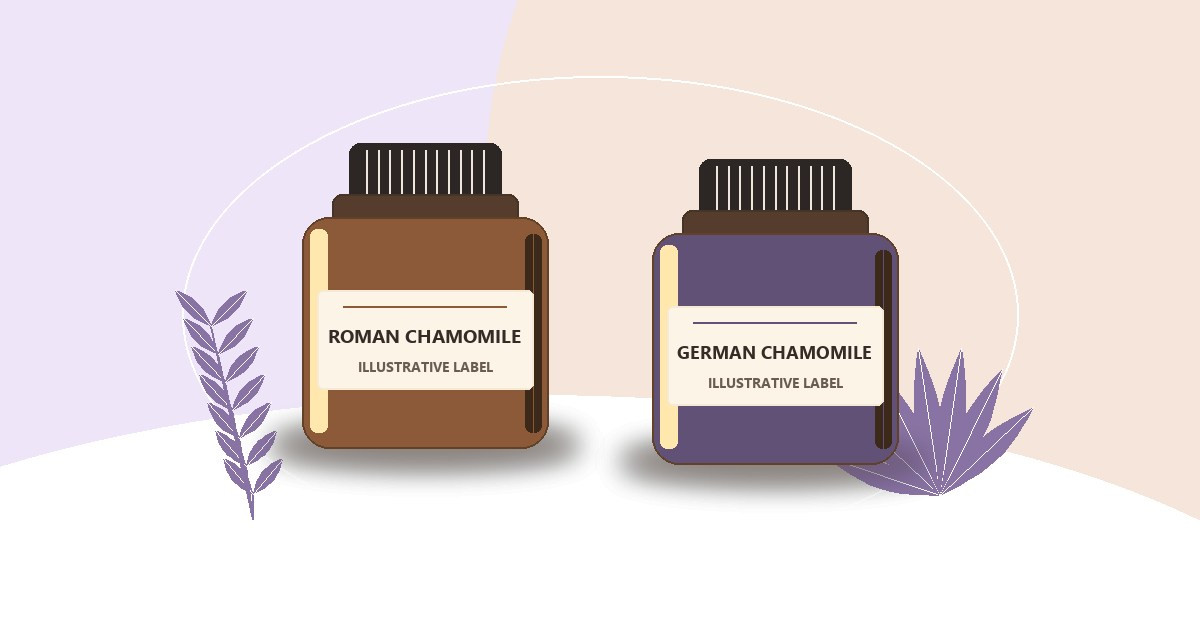
Roman and German chamomile oils have different botanical names. Plant Therapy lists Chamaemelum nobile for its Roman chamomile. Its German product uses a name in the genus Matricaria. That gives you a clearer buying check than the single word Chamomile on the front label. [1] [2] [3]
The names to look for
| Field | Roman chamomile | German chamomile |
|---|---|---|
| Common label wording | Roman Chamomile | German Chamomile [1] [2] |
| Botanical name to check | Chamaemelum nobile | Matricaria chamomilla or the synonym Matricaria recutita in product literature [1] [2] [3] |
| Best row in the document | Botanical Name | Botanical Name, with a synonym check when needed [1] [2] [3] |
eoASSIST Essential Oils Guide
Search for the oil named on your label and check the matching entry.

How to check a product called Chamomile Oil
When only the common name appears on the bottle, look up the product on the supplier's site and match its SKU or reference number. If the specification lists Matricaria recutita, a botanical reference can help you recognise the equivalent naming in other documents. [2] [3]
Use the photograph as a prompt to read the listing. Check any claim about colour against the description of that particular oil or batch. Start an actual bottle comparison with the botanical name, which is easier to trace back to the supplier.
If you already own both bottles, write Roman or German next to the full botanical name in your notes. That small addition makes the next catalog lookup easier, especially when a label starts with Chamomile and puts the field you need on the back.
Find an oil using the name on the bottle
eoASSIST Essential Oils Guide
Search by the name printed on your chamomile label in the eoASSIST guide.