
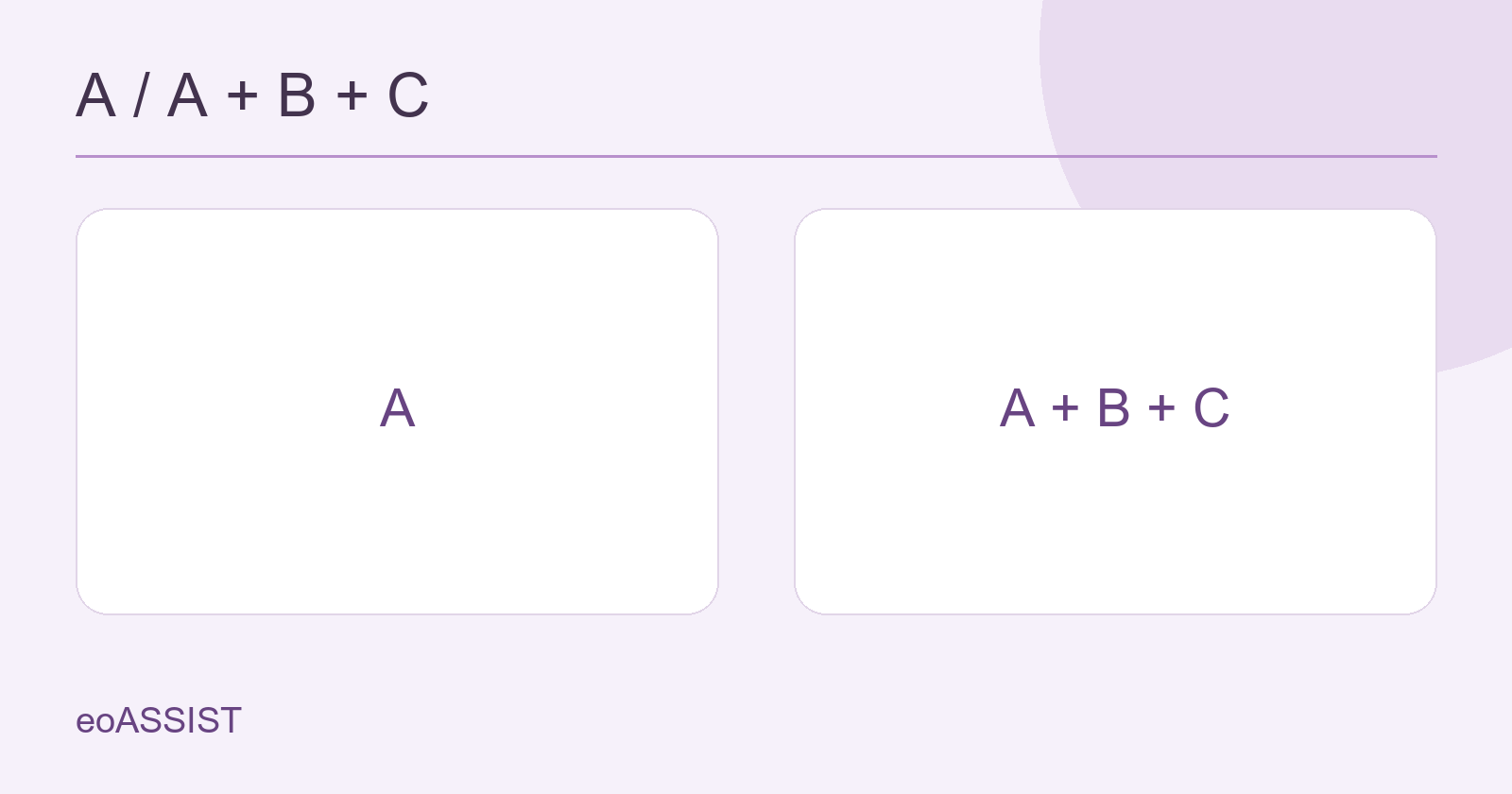
Distinguish a single essential oil from a blend by reading the ingredients. Bottle size and the word "natural" do not answer that question. Start by identifying whether the package describes one essential oil, several oils or a finished formula containing a carrier and other ingredients.
What a single oil describes
An example label reading "lavender essential oil" describes one oil material. "Single oil" does not mean a single chemical molecule. Record the full botanical name, plant part and extraction method when those details are available.
For a blend, read the complete list. A trade name may describe a scent or product concept, without listing the ingredients. "Citrus evening" below is an invented teaching example, rather than an eoASSIST product.
The eoASSIST oil reference
Search for oils by name and open their reference entries.

Three example ingredient descriptions
| Example wording | How to read it |
|---|---|
| Lavender essential oil | Check the full botanical name and product details |
| Lavender and orange essential oils | A formula declaring two essential oils |
| "Citrus evening": carrier oil, essential oils | A finished formula with a carrier. Obtain its complete ingredient list |
The examples contain no mixing ratios or recipes. A finished product can have additional ingredients and its own intended use. Do not apply the directions for one ingredient to the whole formula.
When the full ingredients are missing
Ask for the complete composition of the specific product and a photograph of its label. Clarify whether it contains a carrier, solvent or other ingredients that the trade name does not reveal. If the answer is only "100% natural", repeat the question about the actual ingredients.
Keep separate notes for two products you compare. Copy the ingredients, quantity and intended use into each. This stops a shared word in their names from hiding the difference between an individual oil and a finished formula.
Use the catalogue to choose a reference category
The eoASSIST web catalogue has separate single-oil and blend categories. They help you choose what to read. Check your own bottle's ingredients with its manufacturer. See the carrier-oil comparison for the distinction between a base and an essential oil.
Sources
We checked the public eoASSIST catalogue categories in Chrome on 11 November 2026. AHPA's 2023 guidance on labeling undiluted essential oils supports the distinction between the oil and a finished formula. It is industry guidance within its stated scope, rather than a universal packaging law.
The eoASSIST oil reference
Search for oils by name and open their reference entries.